
A hot sale of a Chinese product, whether assembled in India or anywhere else in the world, may make the country of origin rule fall by the wayside. Moreover, its execution is challenging for businesses as there are no clear guidelines or definitions from the authorities on what constitutes 'country of origin'.

'I'm not surprised with what's happening in India,' 'Tiger' Tyagarajan tells Nivedita Mookerji.

'It's the brazen corruption involving politicians that makes you sit up years after the event,' notes Nivedita Mookerji after reading B K Syngal's Telecom Man.
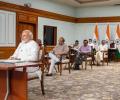
Nivedita Mookerji goes in search of the elusive war room to track and respond to the coronavirus threat.

A single format and simpler, uniform rules would have kept the service going. In other parts of the world including in the US, managing demand and capacities along with ensuring preventive measures were an issue, but there was hardly any administrative hurdle anywhere.
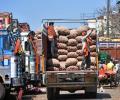
In the last one week several companies have had to face the hurdle of making a distinction between what's essential and what's not. To help them the government has now clarified that grocery would include hygiene products such as hand wash, soaps, disinfectants, body wash, shampoo, surface cleaners, detergents, tissue paper, toothpaste, oral care, sanitary pads, diapers, chargers and battery cells, etc.
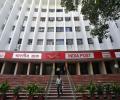
Changing with the times and in compliance with social distancing norms, customers are now picking up their parcels, speed posts and registered letters within the city themselves after they are informed on phone.

For 80 years, news and views aired on BBC Hindi reached audiences in the remotest parts of the country. For millions of its followers, the signature line -'yeh BBC hai (this is BBC)' -- has been like a morning alarm, and the bulletins a vital link between India and the world. That link, which began when there was no mobile phone or internet, is about to break as the radio service will fall silent after January 31. And for many living in smaller towns and in rural areas, life won't be the same again, writes Nivedita Mookerji.

'If Indians are to be truly protected, Parliament must review and address these dangerous provisions before they become law.'

In the worst-case scenario, it will be next to impossible for tech companies like Amazon and Google to run any service that requires user biometrics.

In platforms, such as Twitter, Facebook, TikTok, Helo, and ShareChat, mediators have been asked to put in more hours to ensure that no communal or fake news spread.

If the Personal Data Protection Bill gets passed in its present form, a new class of companies and entities could emerge. The sole job of these new entities would be to manage the consent for data usage of a user.Banks, healthcare firms and fintech companies, among others, fear that sharing non-personal data with the government may hurt business interests. Banks also fear the threat of data misuse.

The biggest fear many of the e-commerce firms have is the possible requirement to change business models overnight, which would drastically increase costs as well as disrupt businesses.
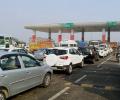
Fintech giant Paytm claimed it is selling more FASTags than all the banks put together on a daily basis.

The delivery staff who drop off packages for online retail giants or food or ferry passengers around the city in their taxis are among the worst affected by the capital's foul air.
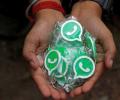
Top officials in key ministries, including finance and IT, are of the opinion that a sensitive payments system such as UPI should not be on a platform whose security is possibly compromised.

Home ministry sources say there are fears that international lobbies might have been involved in spying, to create a narrative around Indian governance as well as the economy.

Data processing compliance is the main reason behind the delay. The government, on several occasions, has made it clear that Indian financial data needs to be stored exclusively onshore and if it is processed outside, it needs to be brought back in 24 hours.
The proposed policy is increasingly becoming an item of negotiation, as the US pushes hard to change India's stance.

Indeed has seen an increase in listings for drivers, food delivery runners, and other service providers.
 © 2025 Rediff.com - Investor Information - Advertise with us - Disclaimer - Privacy Policy - Sitemap - Feedback - About us - Terms of use - Grievances